Your dog's poop can reveal important clues about their digestive health. Changes in color, texture, or consistency may be linked to diet, dehydration, parasites, or underlying medical conditions.
But what does yellow dog poop mean? Is green stool normal? And when should black, bloody, or mucus-covered poop become a concern?
This dog poop color chart explains 10 common stool appearances, their possible causes, and the warning signs that may require veterinary attention. You'll also learn what healthy dog poop should look like and how to recognize changes worth investigating.
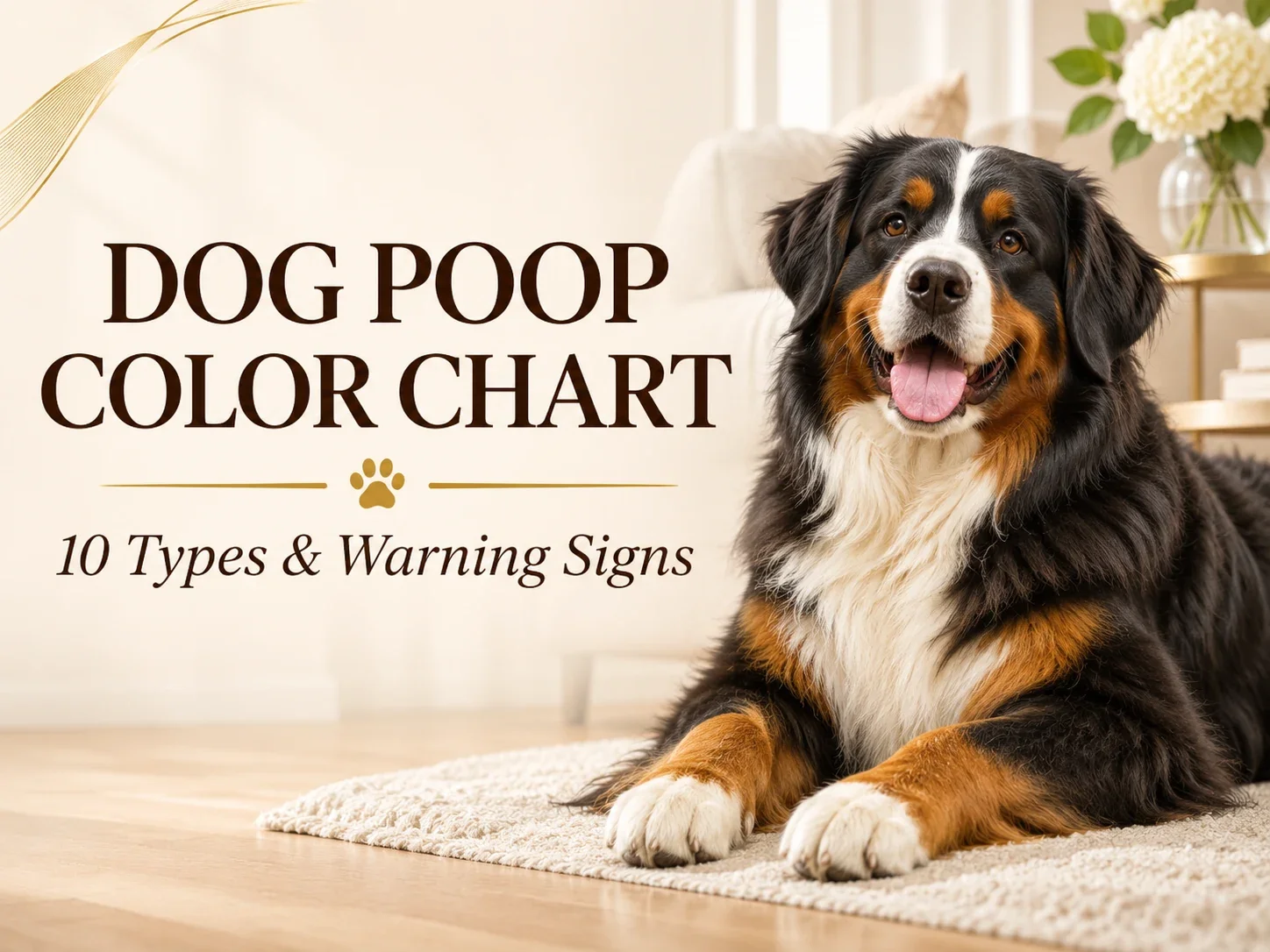
What Does Healthy Dog Poop Look Like?
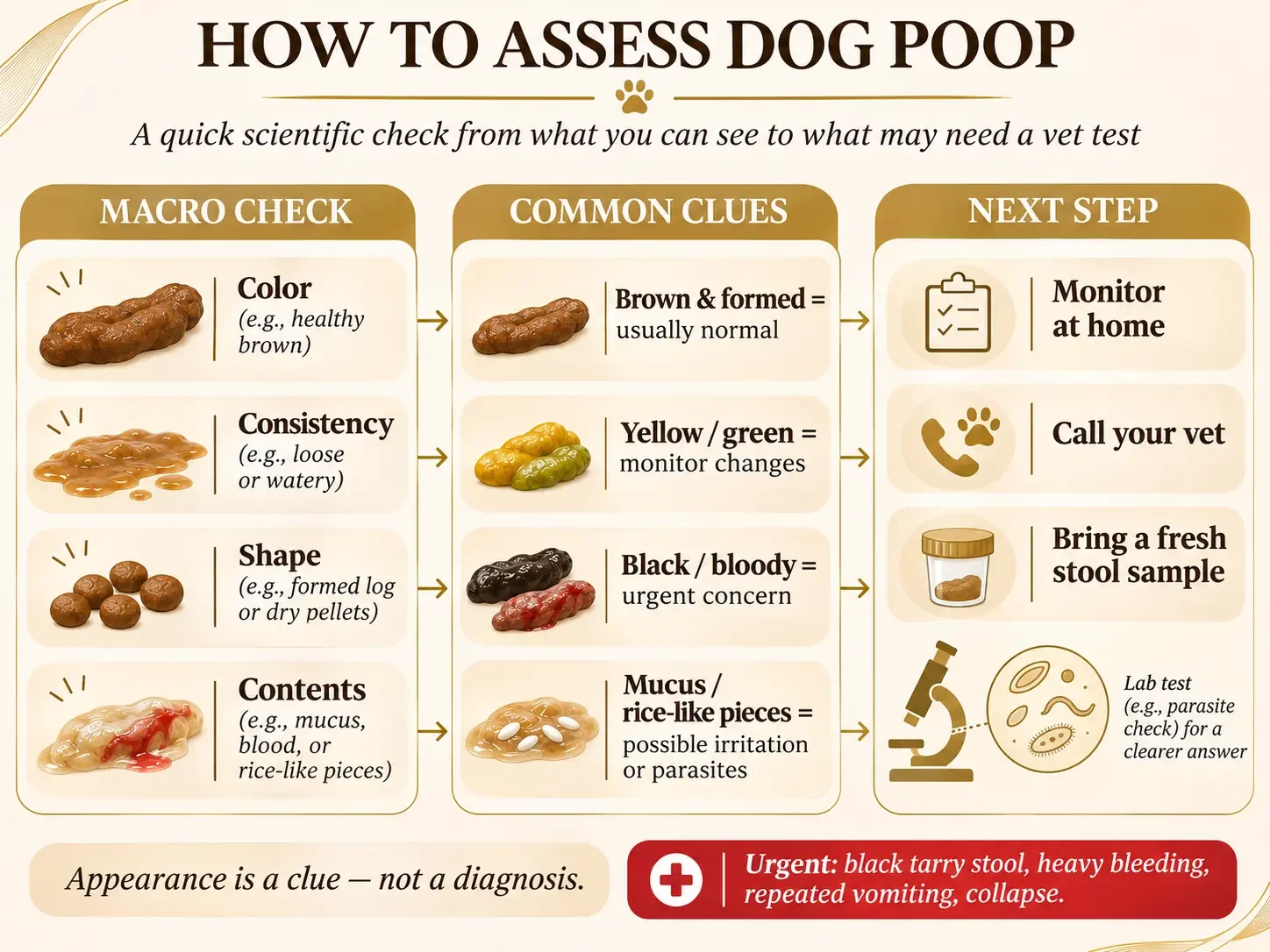
Healthy dog poop is typically chocolate brown, well-formed, and firm enough to hold its shape while remaining slightly moist. It should be easy to pick up without leaving excessive residue on the ground.
A healthy stool generally has four key characteristics:
Color: Medium to chocolate brown.
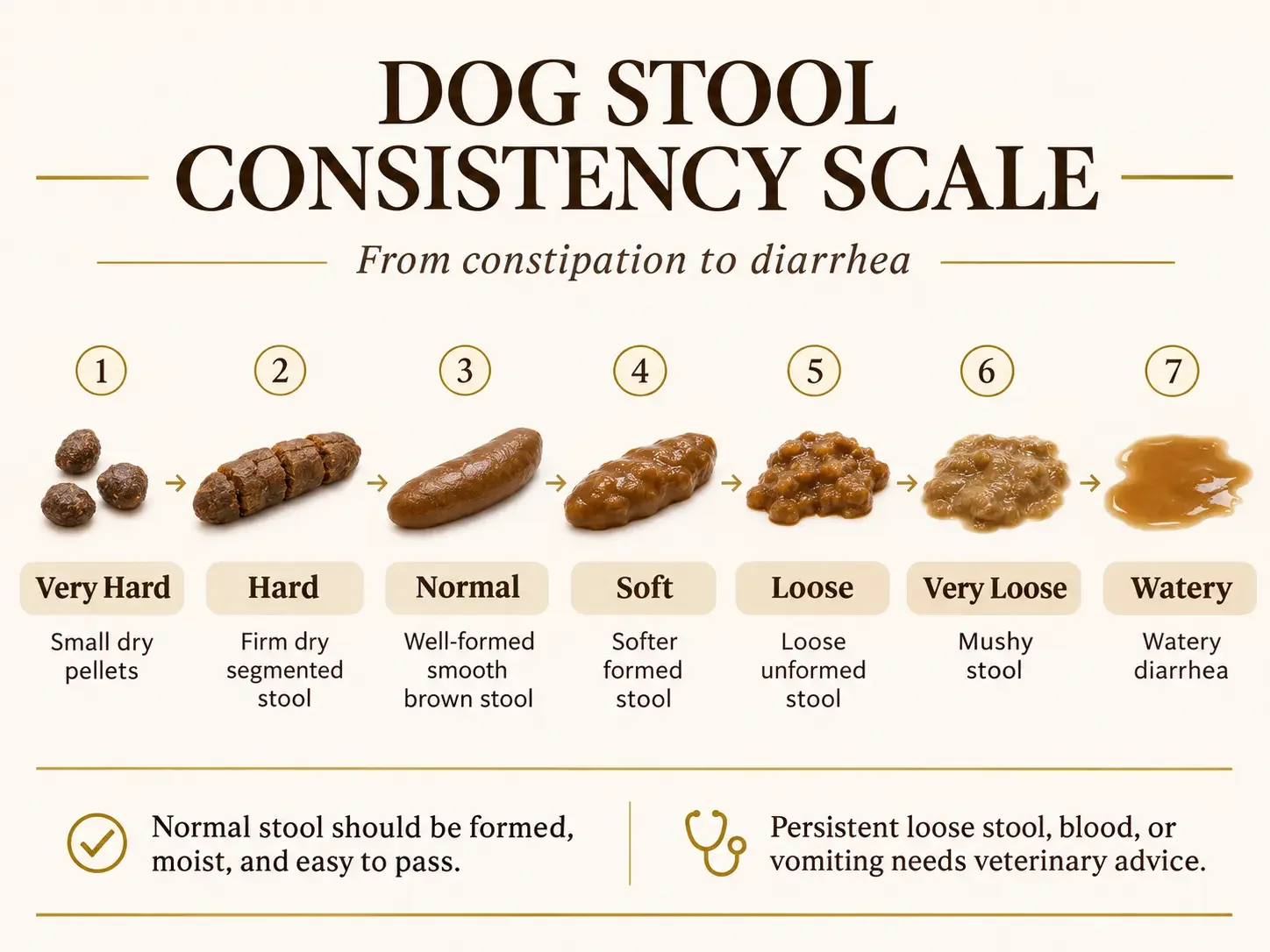
Consistency: Firm but slightly pliable, not hard or watery.
Shape: Log-shaped or gently segmented.
Contents: Free from visible blood, worms, or excessive mucus.
However, even brown stool can indicate a digestive problem if its texture, frequency, or appearance changes significantly. Understanding your dog's normal bowel habits makes unusual changes easier to recognize.
Dog Poop Color Chart: 10 Types and What They Mean
Dog poop can vary in color, shape, and consistency depending on diet, hydration, and digestive health. While some changes are harmless, others may indicate inflammation, parasites, bleeding, or underlying medical conditions.
Use the dog poop color chart below to identify 10 common stool appearances, understand their possible causes, and recognize when veterinary attention may be needed.
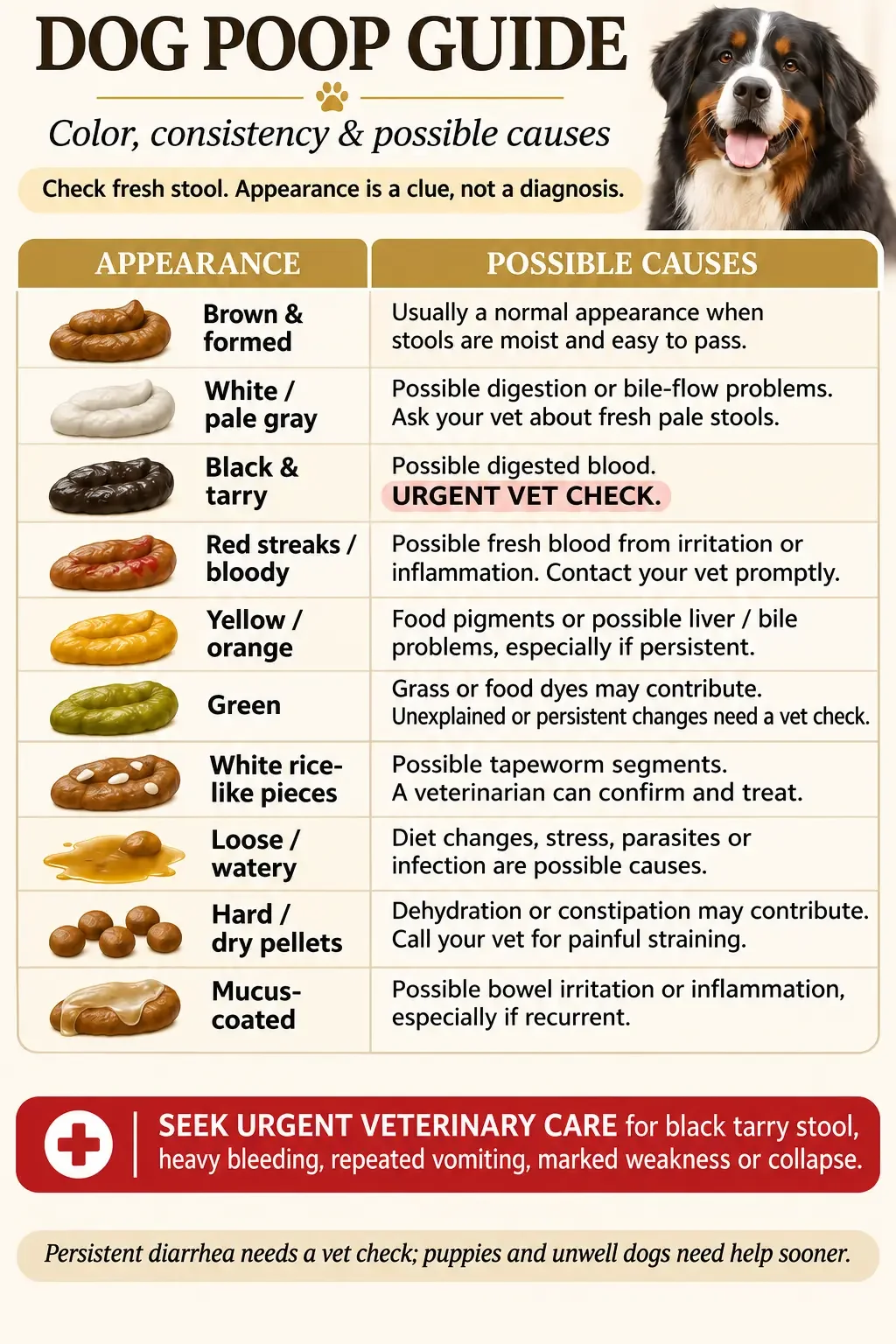
Save This Dog Poop Chart on Pinterest
Brown Dog Poop: What Is Normal?
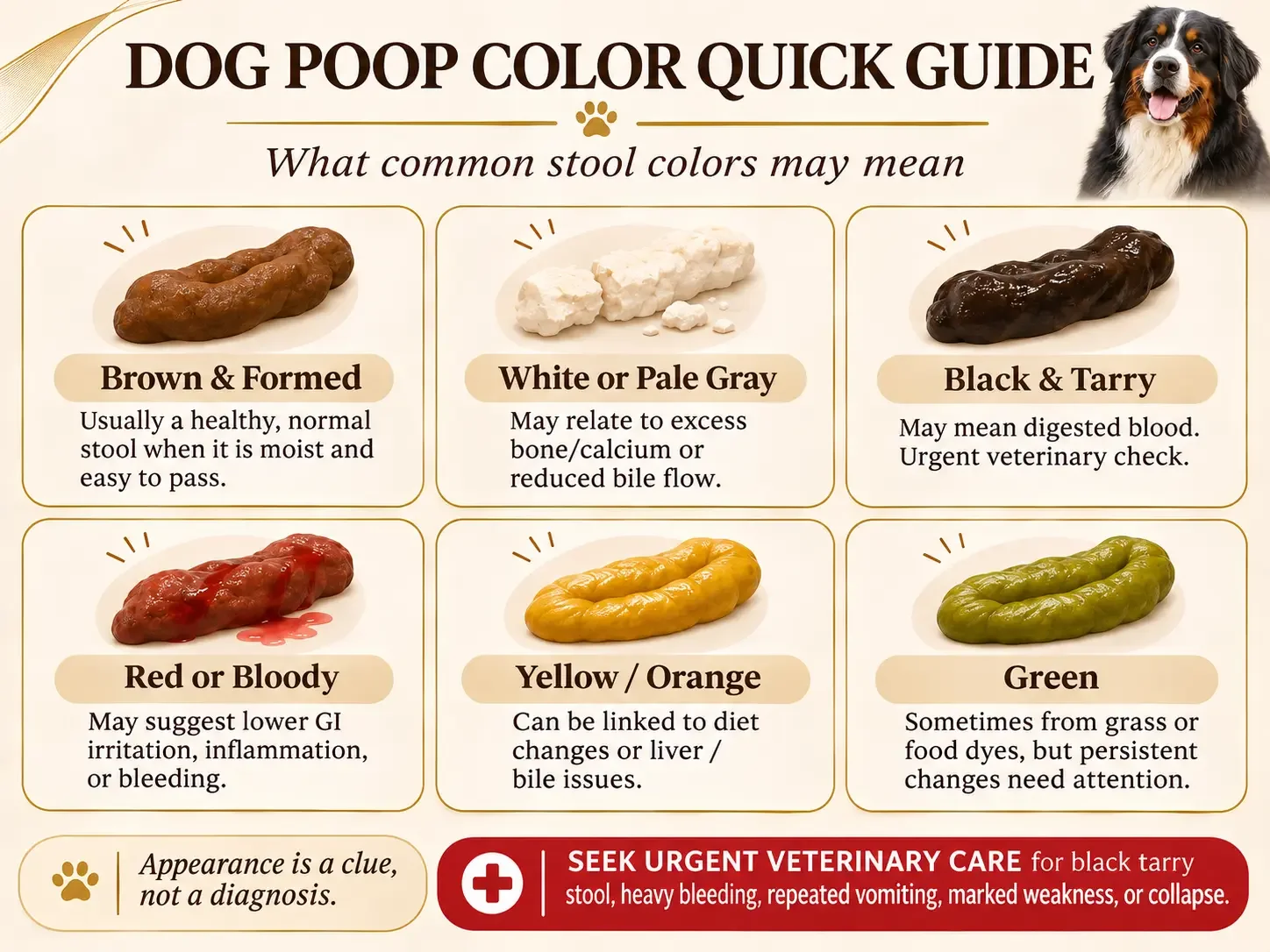
Brown, well-formed dog poop is typically a sign of normal digestion and a balanced diet. Its chocolate-brown color comes from bile pigments that change as food passes through the digestive system.
Healthy dog stool should be firm but slightly moist, log-shaped, and easy to pick up without leaving excessive residue. Consistent bowel movements often reflect good digestive function and appropriate hydration.
However, brown poop isn't always healthy. Unusually hard, watery, greasy, or mucus-covered stool may indicate digestive irritation, dietary problems, or other underlying conditions.
What to do: Monitor your dog's usual stool color, texture, and frequency. Maintain a balanced diet, provide fresh water, and consult your veterinarian if unusual changes persist or occur alongside other symptoms.
White or Pale Gray Dog Poop: Causes and Warning Signs
White, chalky, or pale gray dog poop may indicate dietary imbalances or digestive problems, depending on its texture and appearance.
White or chalky stool: Dry, crumbly, white poop may occur in dogs consuming excessive bones or calcium-rich diets, particularly certain raw-food diets. Hard stools and constipation may also develop.
Pale gray or clay-colored stool: Unusually pale stool may suggest reduced bile pigments reaching the intestines or problems involving the liver, gallbladder, or bile ducts. Greasy, bulky stools may also indicate difficulty digesting or absorbing fats.
What to do: Review your dog's recent diet, especially bone consumption and calcium intake. Contact your veterinarian if the stool is persistently white, pale gray, or greasy. Seek prompt veterinary care if these changes occur alongside vomiting, yellowing of the eyes or gums, abdominal pain, or loss of appetite.
Black and Tarry Dog Poop: Causes and Warning Signs
Black, sticky, tar-like dog poop may indicate melena, a condition caused by digested blood in the gastrointestinal tract. This can signal bleeding in the stomach or upper small intestine and requires urgent veterinary attention.
Possible causes include stomach ulcers, gastrointestinal inflammation, bleeding disorders, or certain medications. Iron supplements and activated charcoal can also darken stool, but black coloration should never automatically be considered harmless.
Warning signs: Black, tarry stool accompanied by vomiting, pale gums, abdominal pain, severe weakness, or collapse may indicate a medical emergency.
What to do: Seek urgent veterinary advice if your dog passes black, tarry stool, even if they seem otherwise healthy. If weakness, pale gums, or collapse occurs, visit an emergency veterinarian immediately. Avoid giving human medications without veterinary guidance.
Red or Bloody Dog Poop: Causes and Warning Signs
Red or bloody dog poop may indicate fresh bleeding in the lower digestive tract, particularly the colon, rectum, or anus. Bright red streaks can appear on otherwise normal stool or be mixed with diarrhea.
Possible causes: Colitis (colon inflammation), intestinal infections, parasites, constipation, or irritation from straining. More serious conditions, including acute hemorrhagic diarrhea syndrome, can also cause bloody stool.
Warning signs: Large amounts of blood, repeated bloody diarrhea, vomiting, pale gums, abdominal pain, or unusual weakness may indicate a serious medical condition.
What to do: Contact your veterinarian promptly if you notice blood in your dog's stool. Seek emergency veterinary care for heavy bleeding, severe bloody diarrhea, collapse, or signs of shock. Take a photo or fresh stool sample to help your veterinarian evaluate the problem.
Yellow or Orange Dog Poop: Causes and Warning Signs
Yellow or orange dog poop may result from dietary changes, food pigments, or food moving too quickly through the digestive tract. Persistent discoloration can sometimes indicate problems involving the liver, gallbladder, pancreas, or bile flow.
Possible causes: Eating pumpkin, sweet potatoes, or artificially colored treats may temporarily change stool color. Rapid intestinal transit, poor fat digestion, and bile-related disorders are other possible causes.
Warning signs: Persistent yellow or orange stool accompanied by greasy diarrhea, vomiting, loss of appetite, weight loss, or yellowing of the eyes or gums may indicate an underlying medical condition.
What to do: Review recent dietary changes and monitor your dog's stool. Contact your veterinarian if the unusual color persists or recurs, particularly with other symptoms. Seek prompt veterinary care if your dog appears unwell.
Green Dog Poop: Causes and Warning Signs
Green dog poop can result from eating grass, green vegetables, food dyes, or changes in digestion. While occasional green stool may be harmless, persistent discoloration can indicate an underlying digestive problem.
Possible causes: Excessive grass consumption, sudden diet changes, rapid intestinal transit, intestinal parasites, or infections. Certain bile-related conditions may also contribute to unusual green stool.
Warning signs: Green diarrhea accompanied by vomiting, loss of appetite, lethargy, or dehydration requires veterinary attention. Bright green or blue-green stool may indicate exposure to certain rodent poisons.
What to do: Review your dog's recent food intake and monitor their stool. Contact your veterinarian if green stool persists or occurs with other symptoms. If rodent poison exposure is suspected, seek emergency veterinary care immediately.
White Rice-Like Pieces in Dog Poop: Causes and Warning Signs
Small, white, rice-like pieces in dog poop may be tapeworm segments, particularly when they appear on fresh stool or around your dog's anus. These segments may move when fresh and resemble dried grains of rice as they dry.
Possible causes: Dogs commonly acquire certain tapeworms by swallowing infected fleas during grooming. Other tapeworm species may be transmitted through infected prey or raw animal tissues.
Warning signs: You may notice rice-like segments in stool, excessive licking around the anus, or scooting. Some infected dogs show no obvious symptoms, although heavier infections can occasionally cause digestive problems.
What to do: Take a clear photo and, if possible, collect a fresh stool sample or visible segments for your veterinarian. Treatment requires an appropriate deworming medication, and flea prevention is essential for preventing common flea-transmitted tapeworm infections.
Loose or Watery Dog Poop: Causes and Warning Signs
Loose or watery dog poop, commonly known as diarrhea, occurs when stool moves through the intestines too quickly, reducing water absorption. Occasional soft stool may be mild, but frequent watery diarrhea can lead to dehydration and electrolyte imbalances.
Possible causes: Sudden dog food changes, eating spoiled food, stress, food intolerances, intestinal parasites, or bacterial and viral infections.
Warning signs: Frequent watery stools, blood in diarrhea, repeated vomiting, loss of appetite, unusual weakness, or signs of dehydration. Puppies, senior dogs, and dogs with existing health conditions are especially vulnerable.
What to do: Provide access to fresh drinking water and monitor your dog's symptoms. Contact your veterinarian if diarrhea persists beyond 24–48 hours, worsens, or repeatedly returns. Seek urgent veterinary care for severe bloody diarrhea, collapse, or significant weakness. Never give human anti-diarrheal medications without veterinary guidance.
Hard or Dry Dog Poop: Causes and Warning Signs
Hard, dry, or pellet-like dog poop may indicate constipation or insufficient moisture in the stool. Healthy dog poop should be firm but slightly pliable, not excessively hard, crumbly, or difficult to pass.
Possible causes: Dehydration, insufficient dietary fiber, excessive bone consumption, reduced physical activity, or certain medications. Some dogs may also experience constipation due to intestinal blockages or other underlying medical conditions.
Warning signs: Repeated straining, painful bowel movements, passing small hard pellets, abdominal discomfort, vomiting, or loss of appetite. Straining without producing stool may indicate a serious problem.
What to do: Ensure your dog has access to fresh water and receives appropriate exercise and a balanced diet. Contact your veterinarian if constipation persists or repeatedly returns. Seek urgent veterinary care if your dog cannot pass stool, appears painful, or develops vomiting or weakness. Do not give human laxatives or enemas without veterinary guidance.
Mucus in Dog Poop: Causes and Warning Signs
Mucus in dog poop often appears as a shiny, slippery, or jelly-like coating around the stool. While small amounts can be normal, excessive or recurring mucus may indicate irritation or inflammation in the large intestine (colon).
Possible causes: Sudden dietary changes, stress, intestinal parasites, bacterial infections, food intolerances, or colitis. Some dogs may also develop loose stools or more frequent bowel movements.
Warning signs: Thick mucus accompanied by bloody diarrhea, vomiting, abdominal pain, loss of appetite, or unusual weakness may indicate a more serious digestive condition.
What to do: Monitor occasional small amounts of mucus in an otherwise healthy dog. Contact your veterinarian if mucus persists, repeatedly returns, or appears with other symptoms. Seek urgent veterinary care for severe bloody diarrhea, repeated vomiting, or marked weakness.
When Should You Take Your Dog to the Vet?
Not every change in dog poop is an emergency. However, certain stool colors, unusual textures, and accompanying symptoms may indicate a serious health problem.
Seek Emergency Veterinary Care If:
Your dog passes black, sticky, tar-like stool.
You notice heavy bleeding or severe bloody diarrhea.
Diarrhea occurs with repeated vomiting, collapse, or extreme weakness.
Your dog has pale gums, severe abdominal pain, or signs of significant dehydration.
Contact Your Veterinarian If:
Diarrhea continues beyond 24–48 hours or repeatedly returns.
White, pale gray, yellow, or other unusual stool colors persist.
Your dog frequently passes mucus-covered stool or strains to defecate.
Changes in stool occur alongside reduced appetite or unexplained weight loss.
Important: Puppies, senior dogs, and dogs with existing medical conditions may require veterinary attention sooner.
Before Your Visit: Take a clear photo of the abnormal stool, note any recent dietary changes, and ask your veterinarian whether to bring a fresh stool sample.
Frequently Asked Questions About Dog Poop
1. What Color Should Healthy Dog Poop Be?
Healthy dog poop is usually chocolate brown, well-formed, and slightly moist. It should hold its shape and be easy to pick up without leaving excessive residue.
2. Why Is My Dog's Poop Yellow but They Seem Fine?
Yellow stool may result from dietary changes, food pigments, or rapid intestinal transit. If the color persists or repeatedly returns, consult your veterinarian.
3. Is Green Dog Poop Normal?
Occasional green stool may occur after eating grass or certain foods. However, persistent green diarrhea or changes accompanied by vomiting or lethargy require veterinary attention.
4. Can Changing Dog Food Cause Diarrhea?
Yes. Switching dog food too quickly can disrupt digestion and cause loose stools or diarrhea. Gradually transitioning to a new food over approximately 7–10 days may help reduce digestive upset.
5. What Do White Rice-Like Pieces in Dog Poop Mean?
Small white pieces resembling rice grains may be tapeworm segments. A veterinarian can confirm the cause and recommend appropriate treatment and parasite prevention.
6. When Is Dog Diarrhea an Emergency?
Seek urgent veterinary care if diarrhea is accompanied by heavy bleeding, black tarry stool, repeated vomiting, collapse, or severe weakness. Puppies and medically vulnerable dogs may require earlier treatment.
Final Thoughts: What Your Dog's Poop Can Tell You
Your dog's poop can provide valuable clues about their digestive health. Healthy stool is typically brown, well-formed, and slightly moist, while unusual colors, textures, or visible contents may signal dietary changes or underlying health problems.
The key is to recognize what's normal for your dog. Monitor changes in stool color, consistency, and frequency, and never ignore persistent abnormalities or warning signs such as black tarry stool, significant bleeding, or severe diarrhea.
Regular observation, balanced nutrition, proper hydration, and timely veterinary care can help protect your dog's digestive health.
Veterinary Sources & References
This article is informed by veterinary guidance and educational resources from the following organizations:
Cornell University College of Veterinary Medicine — Diarrhea in Dogs
Merck Veterinary Manual — Introduction to Digestive Disorders of Dogs
VCA Animal Hospitals — Tapeworm Infection in Dogs
VCA Animal Hospitals — Nutrition for Dogs With Colitis
Purina Institute — Fecal Scoring Chart
Medical Disclaimer: This article is intended for educational purposes only and does not replace professional veterinary advice, diagnosis, or treatment. Consult your veterinarian if you notice concerning changes in your dog's stool or overall health.