3 Subtle Signs Your Senior Dog May Be Hiding Pain
Your senior dog may still wag their tail when they see you.
They may still follow you from room to room, rest beside you, and enjoy many of the routines they have always loved.
From the outside, everything may seem completely fine.
But dogs often adjust their movement, posture, and behavior to cope with discomfort. Because they cannot point to where it hurts, pain may first appear as a small change in the way they stand up, walk, interact, or move through their daily routine.
Here are three subtle signs your senior dog may be trying to show you.
1. Getting Up or Moving More Slowly
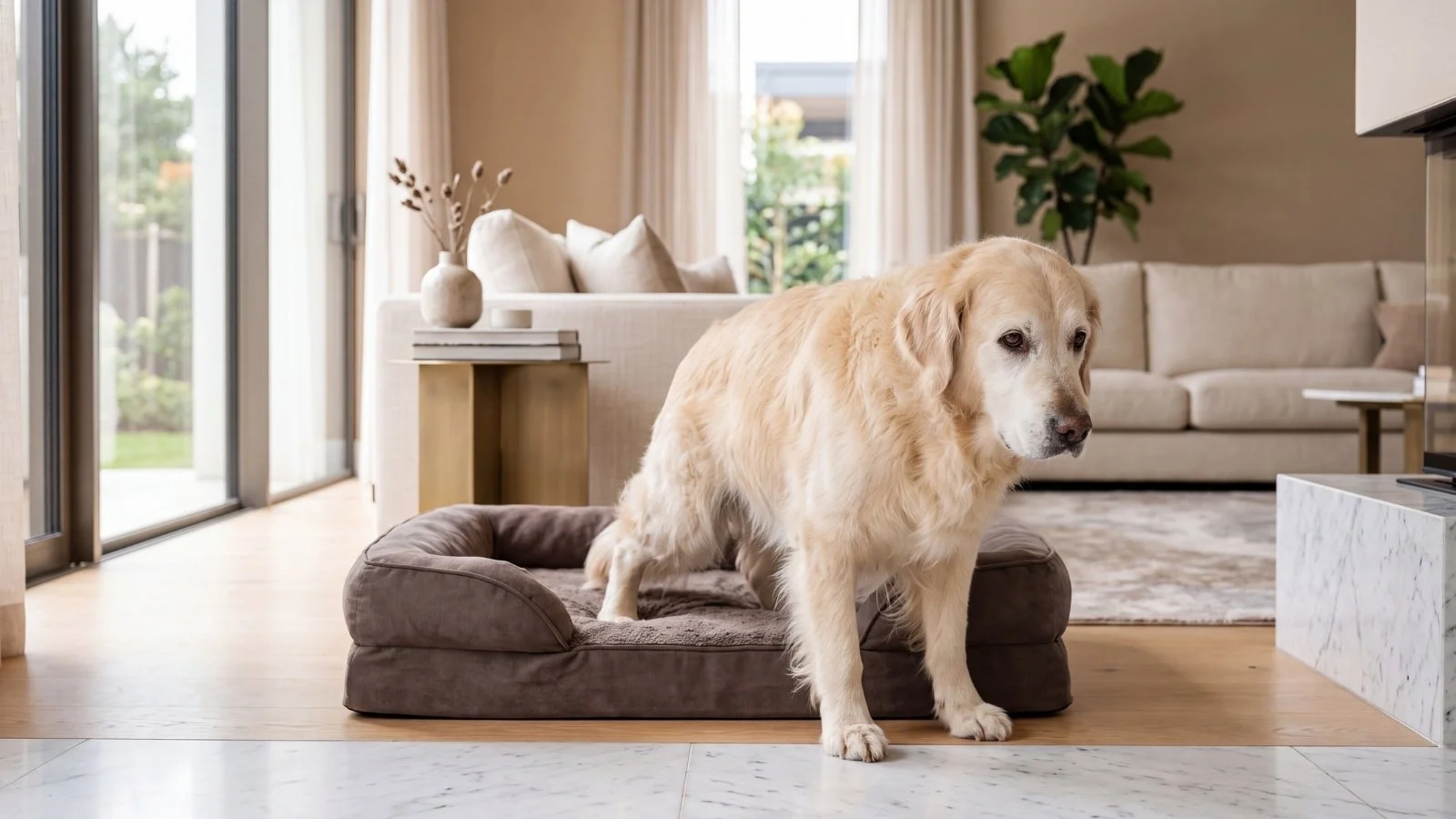
One of the earliest signs of discomfort may be a change in how your dog gets up, lies down, or begins to move.
You may notice a brief pause before standing, stiffness after resting, slower steps, or hesitation on stairs and slippery floors. Some dogs may also shift their weight, take shorter strides, or avoid jumping onto furniture they once used easily.
A single slow morning does not always mean something is wrong. But when the change becomes frequent, lasts longer, or starts affecting your dog’s normal routine, it deserves closer attention.
Keep track of when it happens, how long it lasts, and whether it is becoming more noticeable over time. This information can help your veterinarian understand what may be changing.
2. Changes in Mood or Social Behavior
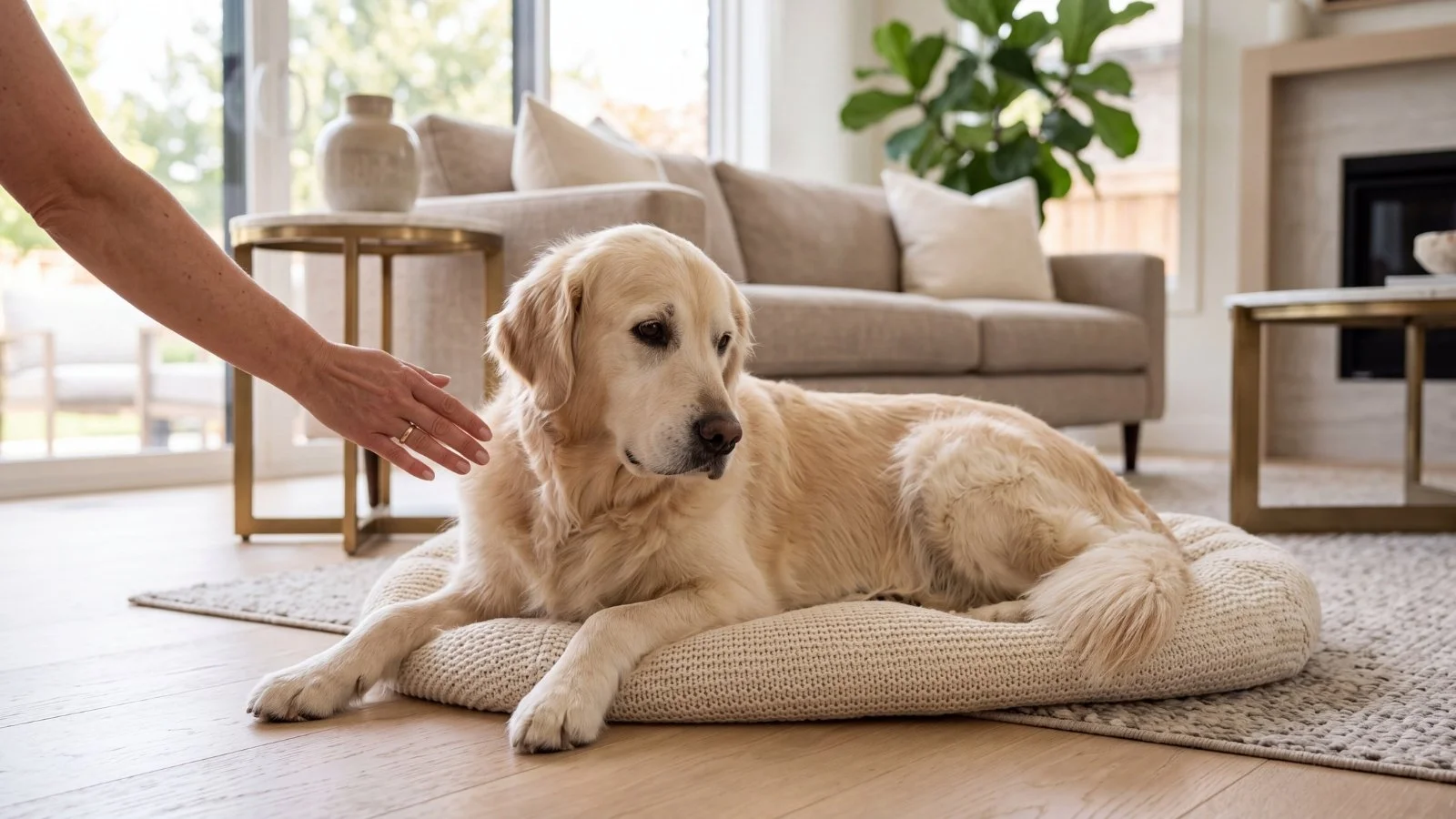
Pain does not always appear as limping or obvious physical weakness. Sometimes, the first noticeable change is in your dog’s personality or social behavior.
A senior dog who normally enjoys attention may begin moving away from touch, avoiding family activities, resting alone, or becoming unusually quiet. Other dogs may seem restless, more dependent, easily startled, or less patient when approached.
You may also notice irritation during grooming, resistance when a sensitive area is touched, or a sudden reluctance to be picked up. These reactions do not necessarily mean your dog has become unfriendly. They may be trying to protect an uncomfortable part of their body.
Pay attention to changes that are new, repeated, or noticeably different from your dog’s usual personality. A brief note or short video can help your veterinarian understand what you are seeing at home.
3. Changes in Daily Habits or Routine

Sometimes pain shows up through small changes in everyday habits rather than an obvious limp.
Your senior dog may begin sleeping more, changing where they rest, eating more slowly, losing interest in walks, or taking longer to settle down. You may also notice more frequent panting at rest, difficulty finding a comfortable position, or changes in bathroom habits.
These signs can have many possible causes, so one change by itself does not confirm pain. What matters most is whether the behavior is new, repeated, or gradually becoming more noticeable.
Look at the full pattern. When several small changes appear together, or when they begin affecting your dog’s comfort and quality of life, it is a good time to speak with your veterinarian.
When to Seek Urgent Veterinary Care
Seek urgent veterinary attention if your dog suddenly cannot stand or walk, shows signs of severe pain, has difficulty breathing, or collapses.
These symptoms may indicate a serious medical problem and should not be treated as normal signs of aging.
When to Contact Your Veterinarian
Not every small change means your dog is in pain. But when a change is new, repeated, getting worse, or affecting your dog’s comfort and normal routine, it is worth discussing with your veterinarian.
Try to note when the change began, how often it happens, and what seems to make it better or worse. Photos or short videos from home can also be helpful, especially when the behavior does not happen during an appointment.
Never give your dog human pain medication unless a veterinarian specifically tells you to. Some common medications for people can be dangerous for dogs.
You know your dog’s normal behavior better than anyone. Small changes may be easy to miss, but noticing them early can help your senior dog stay more comfortable and supported.
Veterinary References
American Animal Hospital Association (AAHA). Chronic Pain Assessment in Dogs (2022).
American Animal Hospital Association (AAHA). Acute and Perioperative Canine Pain Assessment (2022).
U.S. Food and Drug Administration (FDA). Get the Facts about Pain Relievers for Pets.
This article is for educational purposes only and does not replace professional veterinary advice.